
Hail Damage Roof Repair in Springdale, AR
Hail turns up on Springdale roofs most springs, not once in a blue moon. When it does, a local roofer covers each plane on foot, ties the damage to the day the storm passed, and explains in plain terms what it did.
- Insurance steps laid out in plain English
- No pressure to commit on the spot
- Workmanship coverage stated in writing
What repeat hail damage does to a Springdale roof over the years
Hail is a fixture of spring in this part of Washington County, and the NOAA log proves it: twenty hail days over four years, fifty-two reports across the county, a two-inch hen-egg stone near Marrow in June 2023, and golf-ball hail over the Springdale airport in May 2025.
A local roofer climbs up, marks every bruise and lifted tab, and ties each to the day its storm crossed the county, turning damage that would otherwise be argued into damage that is documented, and that record is the backbone of any insurance claim you decide to open.
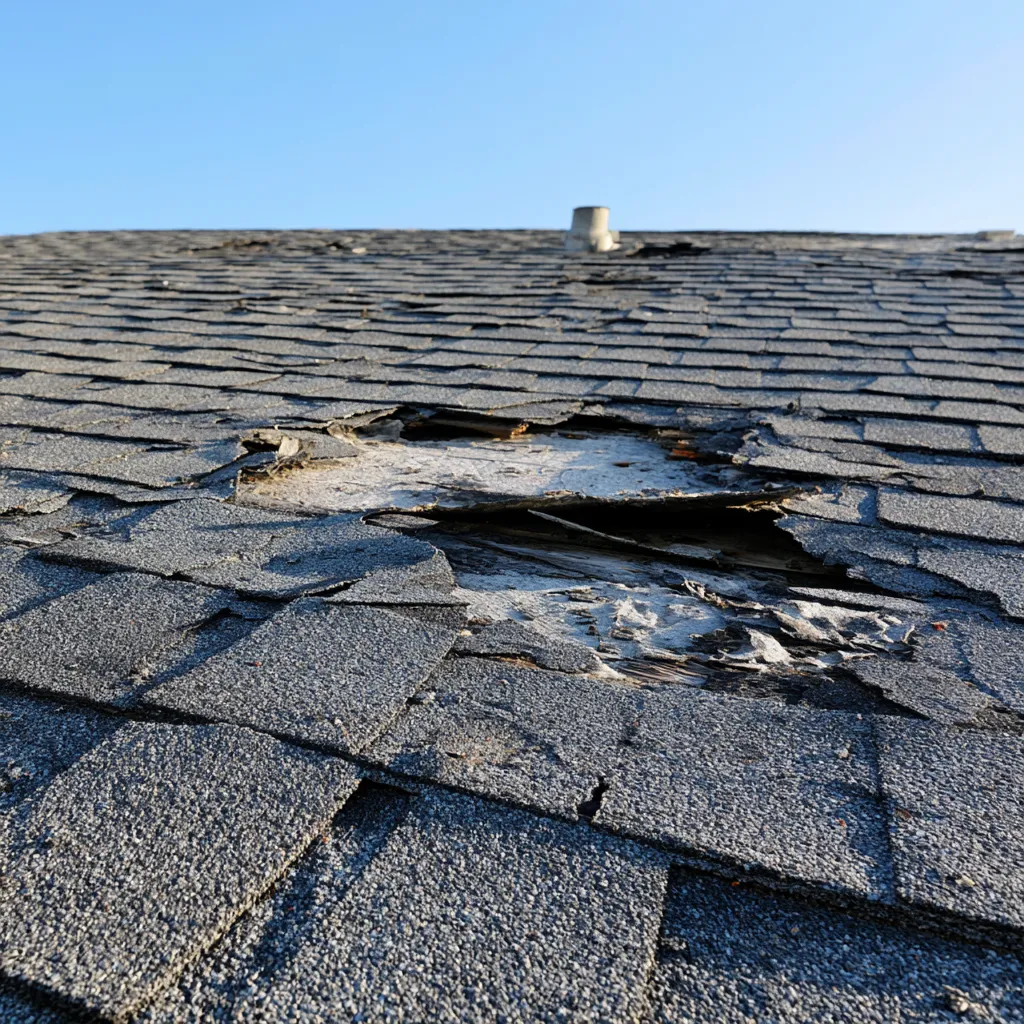
What a hail read records on a roof hit this often
The four things a roofer photographs and dates after a Springdale hailstorm, however big the stones ran this time.
- 01Granule loss in scattered patches
- Dull, circular spots where a stone knocked the protective grit off and exposed the black mat underneath. From the yard it looks like nothing, but a bare patch turns into a leak a season or two later, so a roofer finds them by hand, plane by plane, since each spring lays down more.
- 02Bruises set into the mat
- Tender, sunken rings you notice by touch before sight, where a stone dented the shingle without cracking it open. After several Washington County hail springs these pile up, and last year's bruise often sits an inch from this year's.
- 03Tabs the wind broke loose
- A hard Northwest Arkansas gust, and the county has logged one close to 86 miles an hour, can snap a sealant strip or peel a row of tabs at the ridge. A roofer notes these even when a tab has flopped back into place, because the wind almost always rides in on the hail here.
- 04Dented soft metal, matched to the date
- Bruised AC fins, dimpled vent hoods, and pocked gutters are the side evidence that a stone actually landed, and they help fix the whole event to one datable day in the Washington County record.
That documentation is the foundation a fair claim stands on. For the wider county picture of how often hail lands here, the Springdale storm record has the figures, and a free roof inspection checks your own roof against them.
From the first slope to the final repair
Each slope gets read, every finding is matched to its storm, the file changes hands, then only the hurt shingles touched.
On foot across every plane
A roofer works slope to slope, following the stripped grit, the mat bruises, and the wind-torn rows, and shoots a photo of each, because the damage a repair turns on almost never shows from the ground.
Every mark tied to a dated storm
Each photo carries a timestamp and gets lined up with the county's logged hail, since a date of loss that matches a recorded storm is what keeps the repair-or-replace decision, and the claim resting on it, defensible.
The file handed over, the roof explained
You come away holding the dated record and a clear recommendation, seal the hurt planes or plan a replacement, and when an adjuster climbs up, a roofer can stand on the roof and point to each mark that is already logged.
Only the damaged shingles touched
Repairs stay confined to the shingles the hail truly hurt and are matched to the covering already up, so the untouched planes are left alone and the invoice reflects the actual work, nothing more.
What to look for after another Washington County hail season
What deserves a second look after hail has cleared the county.
- A vent boot cracked or split where a hailstone caught it dead-on
- AC fins bruised, vent hoods dimpled, and gutter aprons dented around the back of the house
- Loose granules gathering in the gutters and rinsing out below the downspouts
- A row of tabs buckled or lifted at the ridge after a gusty Washington County night
- Gutters spilling over or sagging off the fascia where a spring cloudburst outran them
Next to none of this is visible from the ground, so an hour spent on a documented roof inspection pays for itself after any real hailstorm, even when the roof looks fine from below.
Fix the hurt planes, or replace a roof that is spent?
What sets the bill is not the size of the last stone, it is how far the damage spread, and on a roof that has come through several Washington County hail springs that spread tends to reach wider than a single storm would.
Damage kept to one plane usually settles as a targeted repair you pay for directly, while granules lost across every slope on a covering already thin lean toward a replacement with a claim behind it. Nothing gets quoted before the roof is read, and the new-roof cost guide lays the numbers out by grade.
See the per-square ranges- Damage held to a single plane usually reads as a repair, not a re-roof
- Granule loss across every slope, on a worn covering, points toward replacement
- Back-to-back hail springs compound the damage, so a roof here is often further gone than one storm implies
- No figure is set before the planes are documented, so it will not shift later
Springdale sits in real Arkansas hail country, and it shows
Springdale sits squarely in the Washington County hail belt, not off at its margin. The Washington County record carries twenty hail days across four years, a two-inch hen-egg stone near Marrow, and golf-ball hail over the Springdale airport, so a roof here gets tested season after season.
A roofer who knows these roofs logs each bruise and stripped patch plane by plane, building the paper trail ahead of the day you need it. Given how often hail lands, pricing impact-rated Class 4 shingles at the next re-roof is worth the look.
- 01Regular hail, standard shingles
- A stone that hardly marks a premium covering still bruises the thinner architectural shingle most Springdale homes wear, and the booming east side is packed with them.
- 02The wind comes along with it
- Local storms carry hard straight-line gusts, one logged near 86 miles an hour, and a gust that strong can break a sealant strip loose and do its own harm on top of the hail.
Not certain the last storm even reached you? A free roof inspection measures the roof against the county log and gives you a plain answer on your own schedule, and the wider record sits on the Springdale storm page.
Frequent-hail questions from Springdale homeowners
What comes up once another spring storm has rolled off the county.
Q1Our roof already took hail a couple of springs ago. Does a new storm matter?
Q2The hail looked small this time. Could it still have hurt the roof?
Q3How long do I have to file a hail claim in Arkansas?
Q4A roofer offered to cover my deductible after the storm. Is that a good deal?
Q5With hail this frequent, should I just put on a tougher roof?
Q6Can I get the roof checked without opening a claim?
Put this storm on record before you patch it over
The most expensive move after hail is a fast patch that hides what the storm did, especially on a roof due to meet the next one soon. Begin with a documented read: a local roofer records every plane, dates it to the day the hail came through, and tells you plainly which of three roads fits, repair, replacement, or a claim.
A single message to Springdale Apex Roofing gets a local roofer onto the roof before anything is covered over, and which road you take stays entirely your call.