Commercial Flat Roof in Springdale, AR
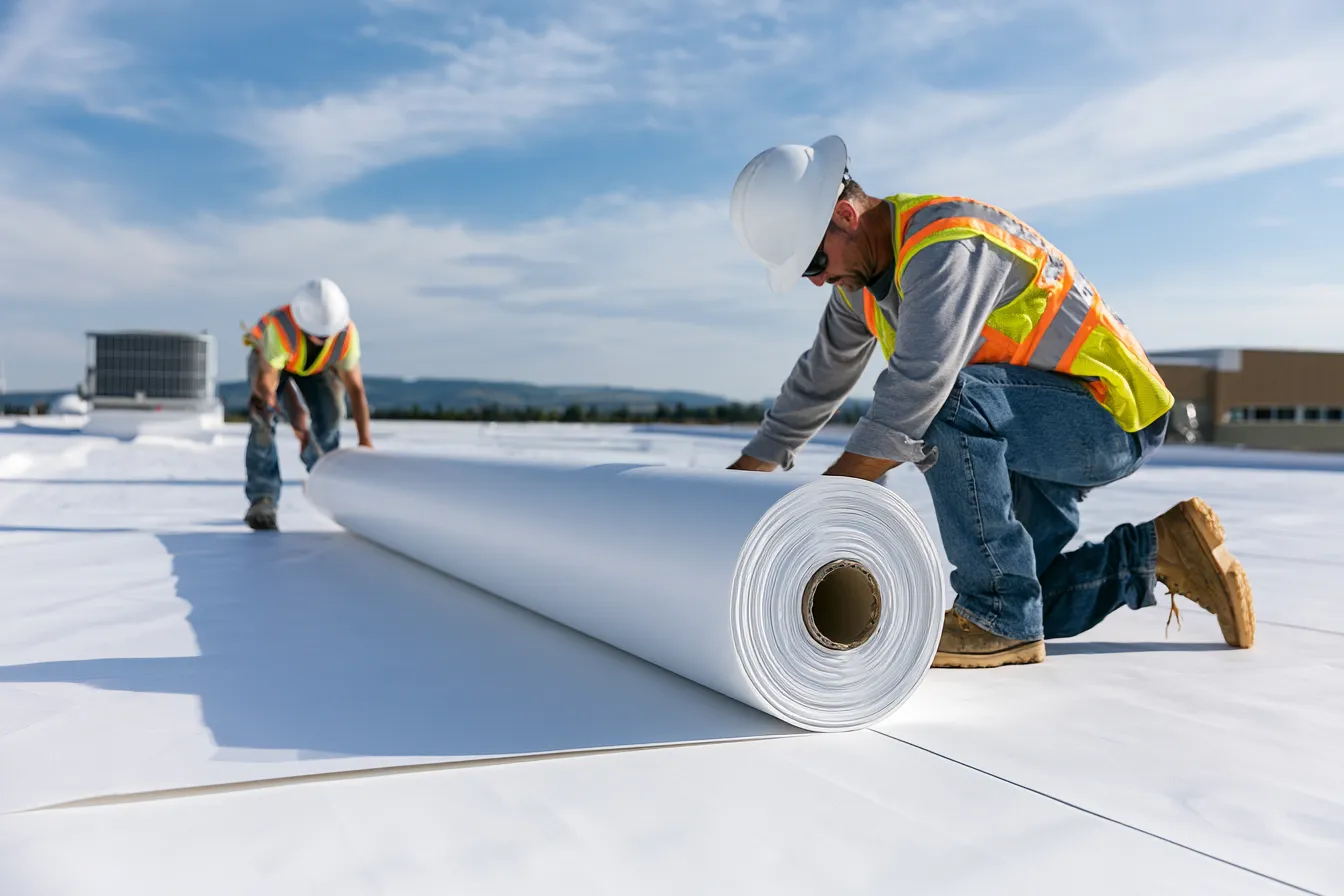
A commercial flat roof in Springdale, AR carries the wide decks over the city's plants and warehouses, built to drain under heavy Arkansas rain. Hail and tired seams are what fail it.
- Drainage and seams read before a price
- EPDM matched to a wide warehouse deck
- Hidden hail on a flat roof found up close
What a Springdale flat roof has to beat
A flat roof is low-slope, not level: it carries just enough pitch to send rain toward its drains and off the building. Springdale's plants, distribution centers, and strip retail carry the widest of these decks, usually a single sheet of EPDM or TPO stretched over open steel.
Heat and hail work a Springdale flat roof, not a hard freeze. A local roofer reads the pitch, the seams, and each rooftop penetration, because a downpour that ponds and a hailstone that bruises the membrane out of sight are how a small gap turns into a leak. That read comes before a repair or a replacement is priced.
What goes into a flat-roof read
Repair or full re-membrane, the call on a flat roof rests on a handful of things an owner can watch a roofer weigh before a number.
- 01EPDM for a wide, open warehouse deck
- EPDM is a rubber membrane, synthetic and long-proven, and it holds up on the wide, open decks of a Springdale warehouse or distribution center, with a welded TPO membrane as the lighter, brighter option. The sheet itself is sound; its weak point is the seams where two rolls join, so a roofer reads and maintains them.
- 02Drainage checked at every drain and scupper
- A flat roof sheds water only when it drains, so a roofer reads whether each drain, scupper, and downspout actually clears. Code expects the deck to handle water even if a primary drain clogs, which is why overflow drainage matters when an Arkansas storm dumps an inch in an hour.
- 03Ponding that pries a tired seam open
- Water that sits instead of leaving is a flat roof's first enemy: it adds weight the deck was never sized to carry and presses at any weak seam below it. A roofer finds the low spots and the slow drains and puts the fix in writing before ponding works a seam into a leak.
- 04Hail that hides on a flat membrane
- Hail bruises and splits a membrane where the ground cannot see it, and Washington County runs a busy hail record. After a storm a roofer walks the field, presses for soft bruising, shoots a photo of any damage, and ties it to the storm date for the claim.
- 05A $50,000 job needs a commercial license
- Arkansas requires a full commercial contractor license, separate from the residential registration, once a project runs $50,000 or more, and a re-membrane on a warehouse deck can cross that line fast. Every roofer sent to the job already carries the license the size calls for, a standing condition of getting the work.
Hail treats a flat roof no better than a pitched one; it just hides the hit, a membrane bruised or a seam split that shows nothing from the lot. A roofer gets up close and photographs the storm damage, and when the membrane is sound but tired, the roof coatings page covers restoring it instead of tearing it off.
Flat-roof questions from Springdale building owners
Plain answers on EPDM, drainage, and Washington County hail for a Springdale low-slope roof.
Q1Is EPDM or TPO the right membrane for my building?
Q2Why does my flat roof hold water instead of draining?
Q3How does hail hurt a flat roof I cannot see from the ground?
Q4Can a tired flat roof be restored rather than replaced?
Q5Does insurance cover hail damage to a commercial flat roof?
Put your Springdale flat roof on file
Hand Springdale Apex Roofing the building and a commercial roofer reads the drainage, the seams, and any hidden hail, then writes one scope for a repair or a new membrane. The read is free and yours to act on now or hold for a budget cycle.