Roof Insurance Claim in Springdale, AR
A Washington County hail claim is won on what a dated file can show, not what you argue from the driveway. A local roofer documents every slope so the damage is shown, not debated.
- Insurance steps laid out in plain English
- No pressure to commit on the spot
- Workmanship coverage stated in writing
How a documented file carries a hail claim
A roof insurance claim in Springdale, AR turns on what a dated file can prove. A Washington County hailstorm does real damage a carrier will pay for, but the adjuster rules on what the record shows, so hidden bruising and cracked mats have to be documented before they can be argued. That is why the storm-damage read comes first.
So a local roofer walks the roof plane by plane, photographs every hit with the date on it, and builds a file that shows the damage instead of describing it. On timing, Arkansas leaves the deadline largely to your policy: read it and file promptly.
How the file behind a claim gets built
Six steps, each naming one term you will actually use as it comes up, built around the dated file a roofer keeps, with every decision along the way staying yours.

The ladder fixes the date of loss
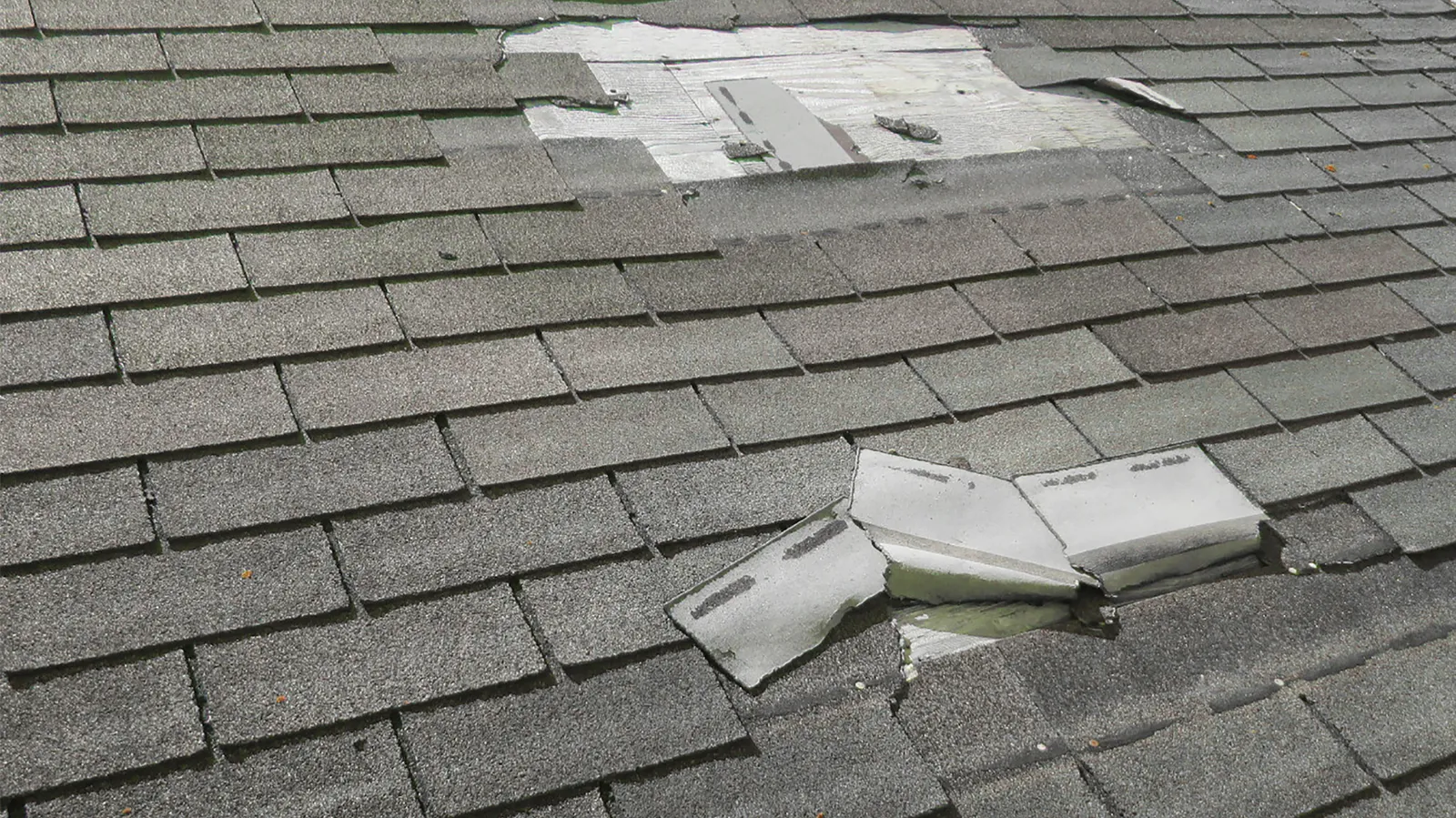
Every claim hangs on one date, the day a Washington County storm did the damage, and after a real hail day you can usually pin one down. So the first move is a ladder, not a call to the insurer. A local roofer works the roof plane by plane, photographs where hail bruised the mat or cracked a tab, and ties it to weather the record can back. Nothing is filed yet. The walk settles whether a claim is worth opening and fixes the date of loss the clock runs from.
date of lossYour policy sets the deadline in Arkansas
Arkansas does not hand you an extra roof-claim window the way a couple of states do; it largely leaves the deadline to your policy, and a policy clock is often shorter than the statute behind it. Many homeowner policies set a filing or suit window measured from the date of loss, sometimes as tight as a year or two, so the safe move is to read your own policy and file promptly rather than lean on any general rule. Your policy and the Arkansas Insurance Department fix the exact dates.
policy filing windowYou make the call, off the file
With the documented file in hand, you phone your carrier yourself and open the claim in your name, comfortably inside your policy's window. The insurer issues a claim number every later step refers back to. A local roofer has no part in this call by design, because the claim is yours to open and yours to steer.
claim numberBe on the roof when the adjuster reads it
Within a week or two the carrier's adjuster comes out, inspects the roof, and decides what the policy owes. The smart move is to be home and have a local roofer up there too, so the hail bruising, the split tabs, and the struck flashing get pointed out rather than missed from the ground. The adjuster still makes the call; the roofer shows what the file already documented.
adjusterWhere the file meets the carrier's list
The insurer sends back its scope, the written list of what it intends to pay for. Set against the dated file, any gap stands out, and whatever the storm did that the scope skipped goes back as a documented request, from a code item like drip edge the old roof never had to decking found soft under the tear-off. The carrier weighs each item on its own, off the photos and measurements the file already holds.
scope of lossThe held-back money, after the last nail
On a replacement-cost policy the carrier holds back a portion, the recoverable depreciation, until the new roof is finished, invoiced, and the Springdale permit is signed off. Once the paperwork goes in, the held-back money releases as the second check. Leave the work undone or the invoice unsent and that amount stays with the carrier.
recoverable depreciationWhat your policy pays, and in how many checks
Most storm claims land as two checks, and the smaller one comes first. Whether your policy is written on actual cash value or replacement cost decides how much of a full roof replacement the carrier funds, worth knowing before a hailstorm rather than in the middle of a claim. Every card turns a single term into real dollars.
Actual cash value, one depreciated check
Actual cash value prices the roof at the age it already is. The carrier begins with what a new roof would cost, then takes off depreciation for every year the old one has served, so a roof deep into its life settles for a fraction of replacement. That figure, less your deductible, is the one check an ACV policy sends, with nothing held back to collect later.
Replacement cost, paid in two parts
Replacement cost value funds a whole new roof, but it comes in two payments instead of one. The carrier pays the depreciated amount first and withholds the recoverable depreciation until the work is done; once the invoice is in, the scope lines up, and the Springdale permit is signed off, that second check follows.
A deductible is your share of the claim, and it is yours to pay. An offer to eat, waive, or rebate it is a red flag, not a discount: it is prohibited in many states and reads as fraud to any carrier, usually run through two invoices or padded damage. The honest version is a real number named up front, a written estimate built on it, and no made-up credit.
A documented claim versus a bare one
The same Springdale roof can read two ways to an adjuster: a dated file that ties the damage to a real Washington County storm, or a bare claim that looks like a roof simply wearing out. The difference decides what gets paid.
| On a Springdale hail claim | Argued from the ground | Shown from the file |
|---|---|---|
| What the damage looks like | A roof that could just be old or worn | Dated hail hits tied to a Washington County storm |
| When it happened | Vague, easy to write off as age | Pinned to a storm on the NOAA record |
| What the adjuster works from | A quick read that can be denied as wear | Photos, dates, and measurements off every slope |
| What a supplement rests on | Memory and a first short estimate | A dated file the roofer can point right back to |
None of it changes what the policy owes; it decides whether covered damage is seen as covered instead of written off as wear. The adjuster still makes the call, and a local roofer is there to show what the roof holds. Confirm your own coverage with your policy and the Arkansas Insurance Department.
Springdale roof insurance claim questions, answered
What Springdale homeowners ask about the filing window, deductibles, ACV versus RCV, and getting a documented claim paid.
Q1How long do I have to file a roof claim in Arkansas?
Q2My roof looked fine after the storm. Can I still have a claim?
Q3Can a Springdale roofer pay or waive my deductible?
Q4Is my roof settled at ACV or RCV?
Q5Do I need a public adjuster to get this paid?
Q6Should I check the roofer's Arkansas registration before signing?
Get the file built before you file
A hail claim stands on what the file can show, so the documentation comes before you reach out to your carrier. Bring Springdale Apex Roofing your address, and a local roofer walks every slope, dates the damage to a Washington County storm, and builds you a file the claim can rest on, in your name.