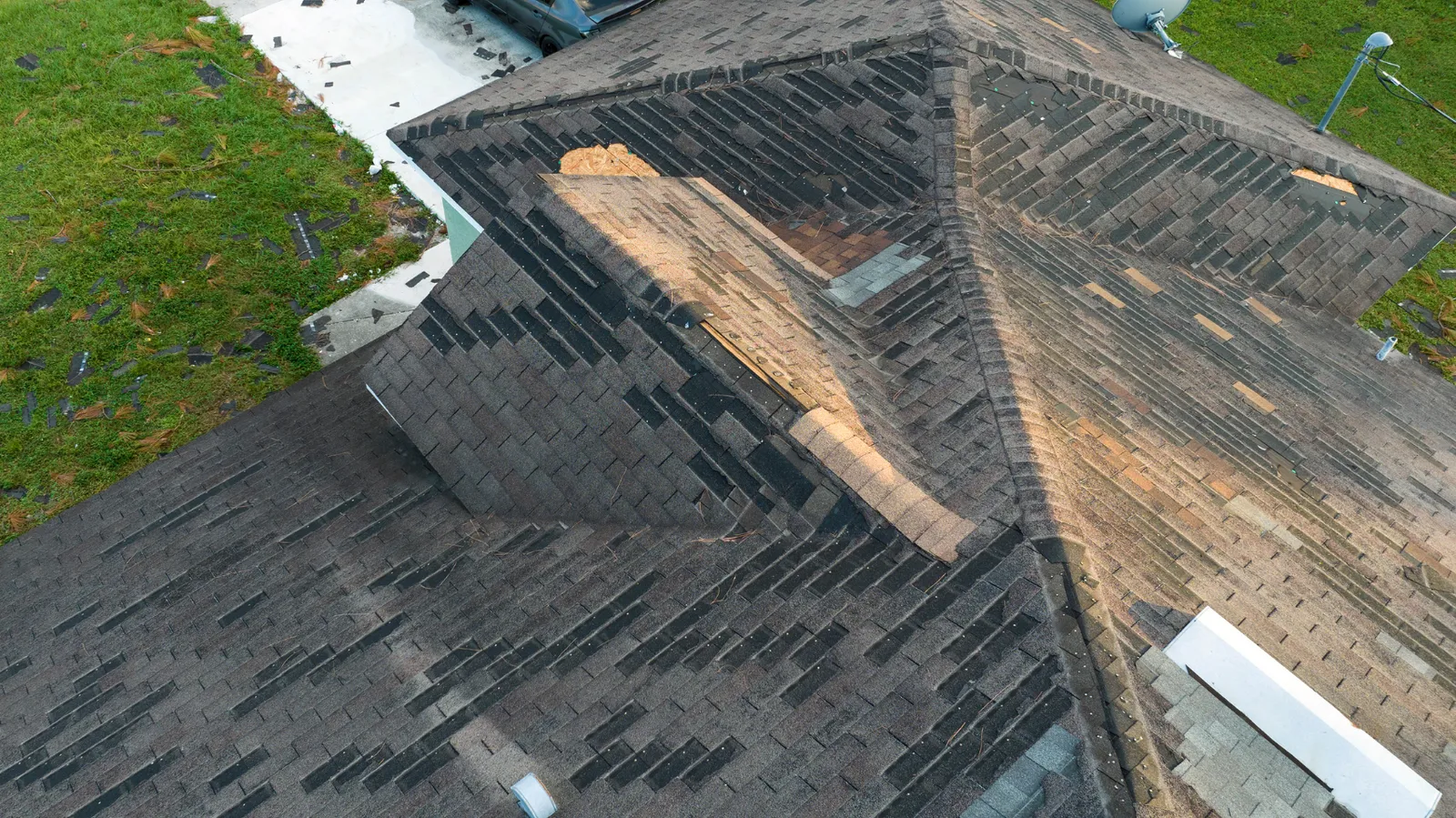
A Washington County hailstorm crosses Springdale, the roar on the roof finally stops, and a week later a homeowner is holding a claim form with no real idea what the roof looks like from above. The gap between what fell and what you can prove is where most hail claims are won or lost. A hail damage roof claim in Springdale, AR rarely turns on how violent the storm felt from the driveway. It turns on a dated, slope-by-slope record of what the hail did to the roof. Springdale sits in active hail country, so this is not a once-a-decade event to scramble through. A good local roofer treats that record as the real work: dated photos of every slope, the damage tied to the storm that caused it, and every code item written on the estimate. Here is a plain read on why a documented record carries a Washington County hail claim, what belongs in it, and why the paperwork settles a claim rather than the argument. The fuller claims walkthrough sits alongside this.
Why a hail claim runs on proof
A carrier settles a hail claim on evidence, not on how the storm sounded, and that shapes everything a homeowner should do first. An adjuster who was not on your roof during the storm reads the damage after the fact, from photos, measurements, and a written scope. When that record is thin, the claim leans on memory and argument, which is exactly the ground a homeowner does not want to fight on. When the record is complete and dated, the damage is shown rather than debated.
The honest framing matters here too. A roofer documents what the hail did and hands you and your carrier the evidence, and the carrier decides the claim. No roofer files the claim for you, speaks for your insurer, or promises an outcome, and anyone who promises otherwise is telling you something a straight roofer cannot. Springdale Apex Roofing never adjusts a claim or touches a deductible. What a documented read buys you is a claim that stands on its own record.
What hail leaves on a roof
Hail damage is often invisible from the driveway, which is why a Springdale roof can look fine and still be failing. A hailstone does its harm in ways a homeowner cannot see from the ground: it bruises the shingle mat, knocks loose the granules that shield the asphalt from the sun, and dents the soft metal on vents, flashing, and gutters. Washington County has logged stones up to two inches across, hen-egg-sized, near Marrow, and golf-ball hail around the Springdale municipal airport, and hail that size cracks and splits shingles outright.
The damage that decides a claim is usually the bruising and granule loss, not a dramatic hole. A bruise crushes the mat so the shingle ages years in one afternoon, and stripped granules leave the asphalt exposed to fail early. A roofer reads those marks slope by slope and dates them to the storm, because a carrier needs to see a specific event, not a roof that simply wore out. That read is the same one a storm and hail inspection is built to produce.
What belongs in the dated record
A record that carries a claim is specific, dated, and tied to the storm, not a handful of blurry phone shots. After a Washington County hailstorm, a local roofer builds the file the way an adjuster reads it:
- Dated photos of every slope, with the bruising, granule loss, and cracked shingles shown up close and in context.
- Close-ups of the dented metal on vents, flashing, valleys, and gutters, sized against the stones that fell.
- The storm date itself, tied to the county hail record, so the damage is anchored to a specific event rather than to guesswork.
- Interior and attic shots of any water stains, showing where the roof let weather in.
- A written scope that lists every code item a re-roof requires, so nothing the estimate needs is left off.
How the record meets the adjuster
The adjuster works for the insurer, so a homeowner is better off with a roofer on the roof at the same time. An adjuster inspects after the storm and writes the scope of loss that becomes the payout, and a first estimate can miss bruised slopes, undervalued labor, or code-required items a Springdale re-roof needs. A roofer standing on the roof points to the damage the record already documents, so less gets overlooked.
When the first scope comes back short, the fix is a supplement, not a fight. A supplement is the normal, legitimate way a roofer submits documented photos, measurements, and code requirements for items the adjuster's estimate left out, and it is how a claim gets funded to actually replace the roof correctly. The record built up front is what makes a supplement credible. None of it guarantees the carrier approves everything, but a documented claim gives an honest one its best footing.
The Arkansas claim clock is your policy's
Arkansas does not hand you a special state clock for a hail roof claim, so do not count on one. Unlike Oklahoma next door, which extends some wind and hail roof claims by statute, Arkansas leaves the deadline to your own policy. Your policy sets the window to report the claim and to sue on it, and that window can be shorter than you expect, commonly measured in a year or two from the date of loss. Read your own policy for its deadlines, file promptly, and treat your policy and the Arkansas Insurance Department as the authorities rather than a neighbor's rule of thumb.
One more piece of the record pays off long after the claim closes. The same dated file that documented the damage also proves the roof was replaced correctly, which is what a workmanship warranty leans on later. Keeping the storm, the scope, and the finished install in one record is the honest version of protecting a Springdale roof, and the roof warranty guide covers what that paper actually promises.
Not sure what last week's hailstorm left on your Springdale roof? Send Springdale Apex Roofing your address, and a local roofer will document every slope, date the damage to the storm, and hand you the record a claim runs on, at no cost. Reach out and we will walk you through what it shows.
Put your hail damage on file