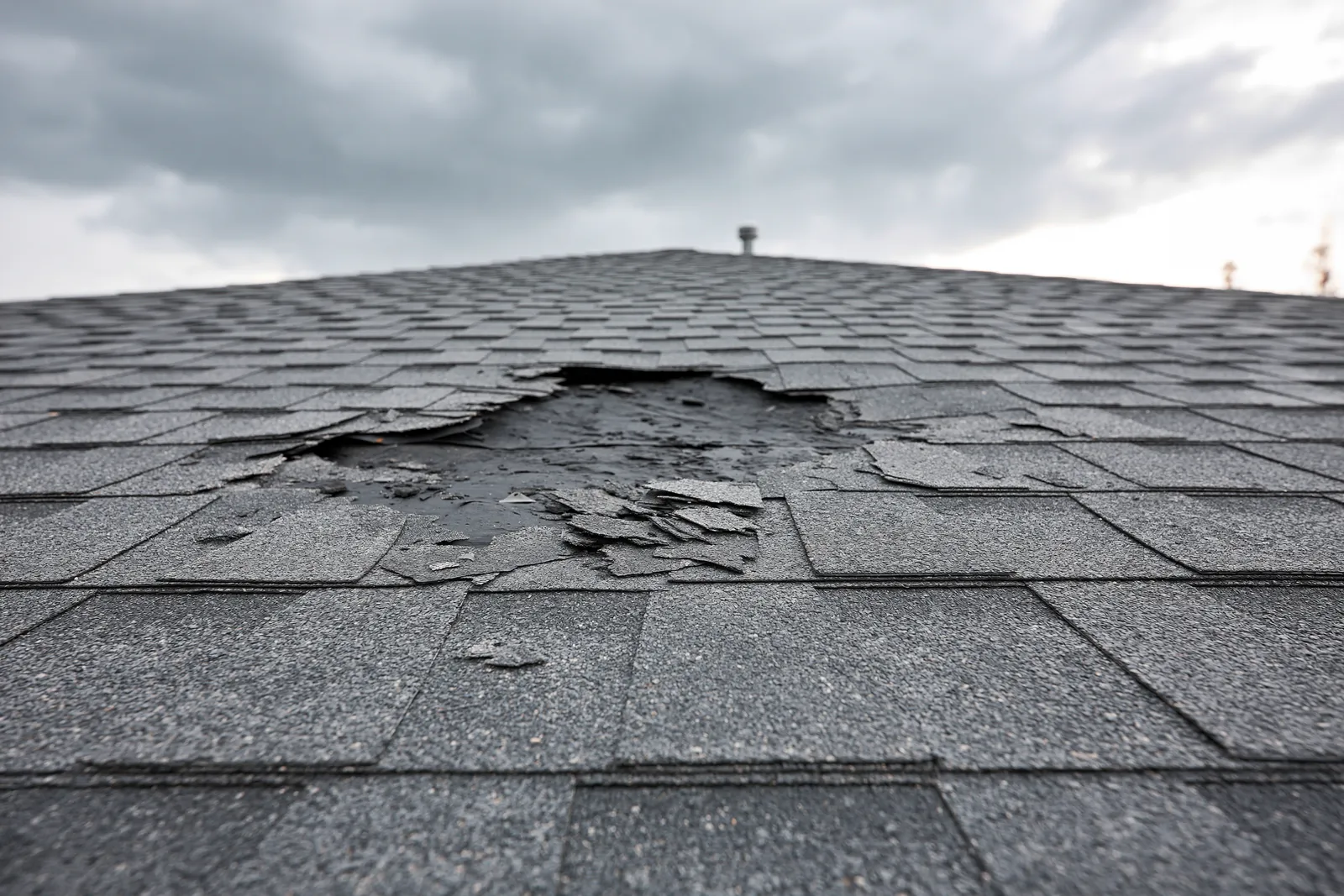
Hail season around Springdale is not a single storm to brace for, it is a stretch of the calendar that works a roof over and over. Across a recent four-year window, the Washington County record logged 20 hail days, a genuinely busy stretch, more active than a lot of towns a homeowner might compare Springdale to. A roof here gets tested most years, and roof hail damage in Springdale, AR is less a question of if than of when it is worth a look. The catch is that the worst of what hail does rarely shows from the driveway. A roof can take a real beating and still look untouched from the yard, which is why an active hail season earns a read rather than a shrug. Here is a plain homeowner guide to what Washington County hail actually does to a roof, how to read the season from the ground, and when it is worth getting a roofer up there to put it on file.
How busy a hail season really is
Springdale sits in an active corner of hail country, and the county record makes that concrete rather than vague. Over a recent four-year stretch, Washington County logged 20 hail days and more than 50 hail reports, with the largest stone measured at two inches across, hen-egg-sized, near Marrow in June 2023. That same storm dropped golf-ball hail in several spots across the county, and in May 2025 golf-ball hail was logged around the Springdale municipal airport with quarter-sized stones in the city. Straight-line winds reached 86 miles an hour in the county in the same window.
Those are county figures, not a stone measured on your own street, and that distinction matters. A hail report tells you the storm was in the area, not that it hit your particular roof, which is exactly why a read on the ground and, when it is warranted, a look from the roof beat guessing. The point of the record is simple: in a place this active, a roof is worked more seasons than not, and small damage adds up if nobody checks.
What a hailstone does to shingles
A hailstone damages a roof in layers, and only the top layer is easy to picture. The obvious harm is a cracked or split shingle, but the damage that quietly shortens a roof's life is subtler: a bruise where the stone crushed the mat, and the granule loss where it knocked away the mineral surface that shields the asphalt from the sun. A bruised shingle can look nearly normal while it ages years in a single afternoon, and the bare asphalt left by lost granules fails early.
Hail works the metal too, and that metal is often the clearest tell. Soft aluminum on vents, valleys, flashing, and gutters dents to the size of the stones that fell, which is why a roofer checks those surfaces first. When the dents on the metal match up with bruising on the shingles, a roofer can read both the size of the hail and the direction it came from. The fuller storm and hail damage story covers why so much of it hides on the slopes.
Signs you can read from the ground
You do not need a ladder to catch the early warning, and after an active hail season it is worth a walk around the house. A few signs point at hail rather than ordinary wear, and any of them is a reason to get a roof read:
- Granules collecting in the gutters and at the bottom of downspouts, the roof shedding the layer that protects it.
- Dents or dimples on gutters, downspouts, vents, and metal flashing, and on softer things nearby like a mailbox or a car.
- Shingle pieces, granule piles, or bruised-looking spots visible on the roof or in the yard after a storm.
- Dark or shiny patches on the roof where the granules have been knocked off and the asphalt shows through.
- A ceiling stain or a damp spot in the attic in the weeks after a storm, which means water is already getting in.
When to get a roof on file
Timing is the part homeowners most often get wrong, and getting it right is cheap. The best time to have a roof read is soon after a hail season while the evidence is fresh, not months later when a small problem has grown into a leak. A dated inspection after an active stretch does two things at once: it catches damage while a repair is still small, and it puts a record on paper in case the damage turns out to be a claim.
The record is the quiet reason to move early. A roofer who reads the roof, dates any damage to the storm that caused it, and hands you a written report gives you something useful whether the roof needs work now or not. Even a clean bill is worth having, because it is a baseline the next storm gets measured against. A documented roof inspection after hail season is the honest version of staying ahead of it.
What a roof read tells you next
A read does not automatically mean a new roof, and an honest roofer says so. Depending on what the hail did, the answer might be a targeted repair of a few damaged slopes, a full replacement if the granule loss and bruising are widespread, or simply a dated baseline and a plan to watch it. The right call depends on the roof in front of the roofer, not on a quota, and a straight read lays out the options with the reasons behind each.
What you should not do is wait for a leak to force the decision. By the time water is on a ceiling, a repair that might have been a few slopes can become a bigger job, and the storm that caused it is harder to date. Reading a Springdale roof after an active hail season, while the damage is fresh and small, is how a homeowner stays in front of both the repair and any claim. A targeted roof repair handles the small stuff before it grows.
Springdale just came through another hail season and you are not sure what it left up top? Send Springdale Apex Roofing your address, and a local roofer will read every slope, date any damage to the storm, and hand you a written report, at no cost. Reach out and we will tell you plainly where the roof stands.
Have your roof read after hail