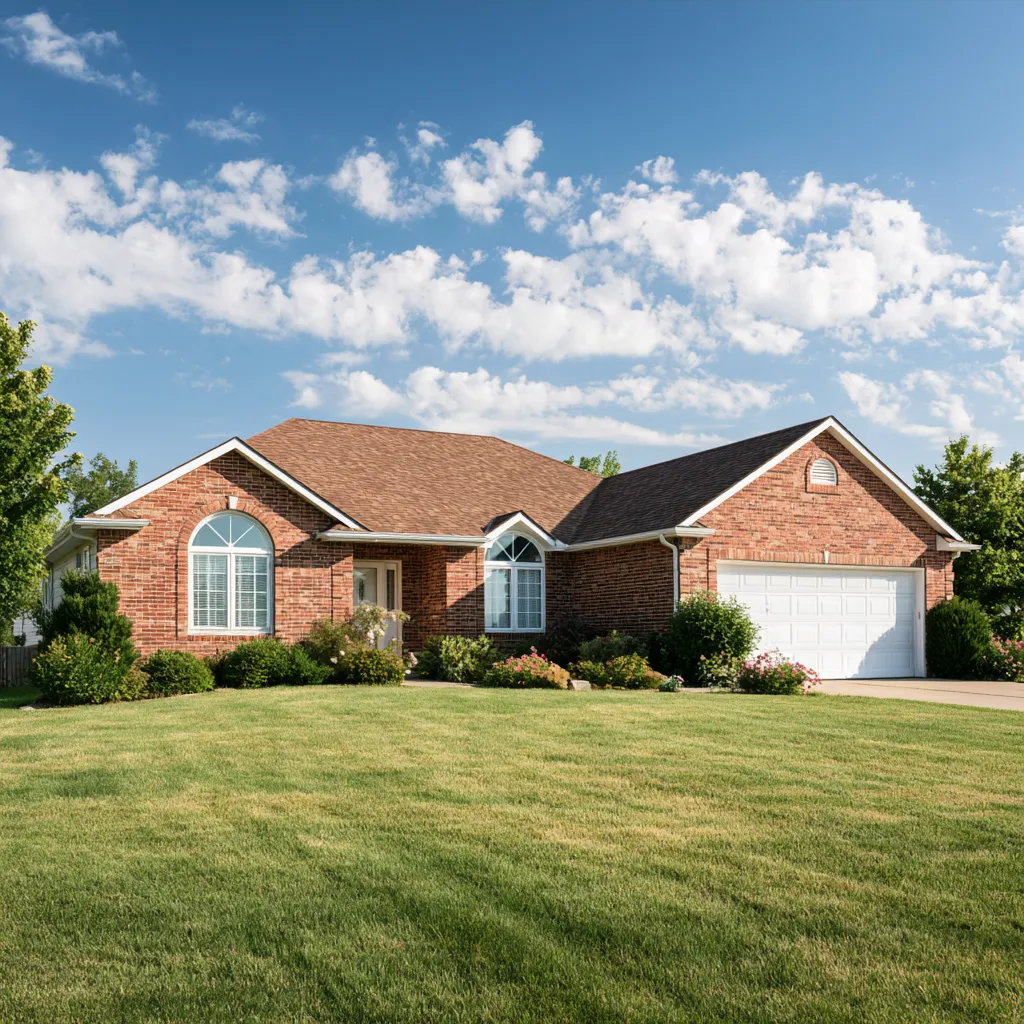
After a Washington County hailstorm, the knocks on the door start, and a Springdale homeowner suddenly has to sort a trustworthy roofer from a storm-chaser passing through. Arkansas gives every homeowner a real backstop here, and it is the standard Springdale Apex Roofing builds every job on: the state registration, the bond behind it, insurance, and everything in writing, before a roofer is ever sent to your address. Arkansas regulates roofing at the state level, which works in a homeowner's favor. A roofer doing residential work over $2,000 is required to hold an Arkansas Residential Roofer Registration, backed by a financial bond the state requires. Here is a plain read on what that standard covers, why each piece matters, and why it is already met before you ever send the first message.
The Arkansas state registration, already met
Arkansas is one of the states that regulates roofing directly, and that works in a homeowner's favor. For residential jobs over $2,000 in labor and materials, the state requires a Residential Roofer Registration through the Arkansas Contractors Licensing Board. The registration is not a competency license, but it is the one state-level bar every roofer working in Springdale has to clear.
Every roofer sent through Springdale Apex Roofing already carries it, current, before the first inspection is booked. On a larger commercial building the bar is higher still: Arkansas requires a full contractor license for commercial projects of $50,000 or more, confirmed the same way. The roofing permits page covers how the registration fits with the city permit a re-roof pulls.
What the $15,000 surety bond backs
The registration comes with a surety bond, and it is worth understanding what that bond actually does. Arkansas requires a roofer to post a $15,000 surety bond as a condition of the Residential Roofer Registration, a financial guarantee filed with the state that stands behind the roofer's obligation to operate lawfully. It is not the same as liability insurance, and it is not a promise the state pays for poor work.
Clearing registration and posting the bond is a state requirement a fly-by-night crew usually skips, which is exactly why it screens out a share of the storm-chasers who follow hail across state lines. Every roofer sent to a Springdale address already has both in place, plus proof of the roofer's own liability insurance, before a truck shows up.
What comes documented, before you sign
The rest of the standard is just as plain, and none of it is left for the homeowner to chase down:
- Current Arkansas Residential Roofer Registration, in the company's name, for any residential job over $2,000.
- Liability insurance on file, so a mishap on the roof is not the homeowner's problem.
- A local, verifiable presence around Springdale, not a cell number and out-of-state plates.
- A written, itemized scope and estimate, materials and code items priced before any money changes hands.
- No demand for a large cash deposit or full payment up front.
No deductible games, ever
One offer never happens here: covering, waiving, or eating a homeowner's insurance deductible. That pitch sounds generous, but a deductible is the homeowner's share by contract, and a roofer who offers to make it disappear is usually rebuilding the gap through inflated or phantom damage, which is fraud a homeowner can be pulled into. Springdale Apex Roofing builds the honest scope around the real deductible, every time.
The same goes for pressure. No today-only pricing, no push to sign before a second quote gets a look. A homeowner is free to take the time, compare estimates, and read the fine print, and the roof claim help page walks through how an honest claim actually works, deductible included.
Why the paperwork is the whole point
Registration confirmed, insurance on file, and an itemized scope in writing, that is what every job starts with, because paper is what a homeowner can hold a roofer to. In a county that draws out-of-town crews after every active hail season, the written trail is what stays behind once the storm-chasers move on.
A local roofer who documents the roof, carries the registration and insurance, and puts the scope in writing is showing a homeowner how the job runs before it starts. A documented roof inspection is the first piece of that record.
Not sure how to tell a trustworthy Springdale roofer from a storm-chaser passing through? Send Springdale Apex Roofing your address, and a local roofer will read your roof and put the same standard to work, the Arkansas registration, the bond, and everything in writing, at no cost. Get in touch and we will keep it plain.
Start my free documented inspection